Smarter Home Exercise Programs: Improving Patient Engagement Beyond the Clinic
Fewer than half of patients fully follow their home program. Research points to clear instruction, reminders and feedback as the levers that work. Here is how to design a program patients actually follow.
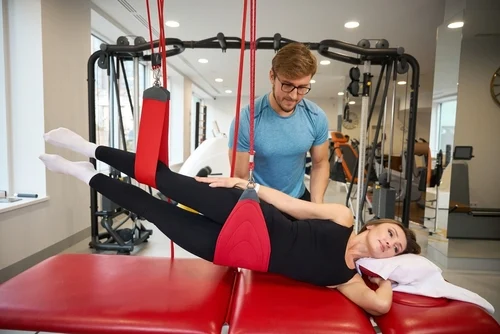
The home program is where rehabilitation either works or quietly fails. A patient may see their therapist once or twice a week, but recovery depends on what happens on the other days. And on those days, many patients struggle.
The adherence problem
A 2024 study of 203 patients found that only 48.8% fully adhered to their prescribed home exercise. Another 27.6% adhered partially, and 23.6% did not adhere at all (Petrosyan et al.). Other research has reported non-adherence rates as high as 70% (Musculoskeletal Science and Practice).

The same study had a striking finding about why. Among patients who felt their instruction was inadequate, 81.3% did not adhere, compared with 48.7% of those who felt well instructed. Printed handouts on their own were not associated with better adherence.
What actually improves adherence
Clear, visual instruction
If patients are unsure how to do an exercise, they do not do it. Video demonstrations that patients can replay at home remove the guesswork that a stick-figure handout leaves behind.
Reminders and remote support
In a randomized trial in the Journal of Physiotherapy, 80 people with musculoskeletal conditions received their home program either on paper or through an app with remote support. The app group adhered better and had slightly better function at four weeks (Lambert et al.). The authors noted the clinical importance of the difference was unclear, which is an honest reminder that adherence is a means, not an end.
A systematic review of 10 randomized trials with 1,117 participants found that 7 of 10 reported a significant improvement in adherence with digital interventions, especially in the short term (PMC).
Doses that fit real life
Programs that ask for too much, too often, get skipped. Specific sets, reps, holds and rest days make expectations clear and achievable.
Visible progress
Patients stay motivated when they can see they are improving. Streaks, completion history and simple check-ins on pain and difficulty turn effort into feedback.
A therapist who notices
Adherence improves when someone is paying attention. When a patient misses three days and receives a friendly message, the program feels like a relationship rather than homework.
Designing a smarter program
- Keep it short. Start with the few exercises that matter most.
- Prescribe precisely. Sets, reps, holds and frequency for every exercise.
- Show, do not tell. Use video for every exercise.
- Remind at the right time. Let reminders match the patient's routine.
- Ask for feedback. Quick check-ins on pain or difficulty give you data to adjust the plan.
- Follow up early. Reach out after a few missed days, not at the next visit.
- Progress on purpose. Update the program as the patient improves so it stays relevant.
How TheraPro builds home programs
In TheraPro Clinical, therapists build a home program in a few clicks from a professional video library, or use their own videos. They set sets, reps, holds, rest days and frequency for each exercise and can save reusable templates for common protocols. The program appears in the clinic's branded patient app, where patients see today's plan, their progress and their streaks, with reminders and check-ins.
On the clinic side, analytics show home program adherence by patient and therapist, and follow-up queues highlight patients who stop checking in, so outreach happens while it can still make a difference.
The takeaway
Home programs fail for predictable reasons: unclear instruction, no reminders, no feedback and no one noticing when patients stop. Each of those has a practical fix. Clinics that treat the home program as a living part of care, not a handout at the end of a visit, give patients a much better chance of finishing what they started.