AI-Powered SOAP Notes: The Next Evolution in Clinical Documentation
AI can now turn a visit into a structured SOAP draft in minutes. What the research shows, what can go wrong, and the review workflow that keeps the therapist in charge.
The SOAP note has been the backbone of clinical documentation for decades. Subjective, Objective, Assessment, Plan: a structure that makes care traceable, billable and defensible. It is also one of the most time-consuming parts of a therapist's day.
AI drafting tools promise to change that. The idea is simple. The tool listens to, or reads a transcript of, a visit and produces a structured draft. The clinician reviews it, corrects what needs correcting and signs. Here is what that looks like in 2026, and what the evidence supports.
What the research says
The best evidence so far comes from physician practice, where ambient AI scribes have been studied in randomized trials.
In a trial at UCLA Health published in NEJM AI, 238 outpatient physicians across 14 specialties were randomized to one of two commercial AI scribes or usual care, covering about 72,000 patient encounters over two months (UCLA Health; PubMed).

Key findings:
- One tool reduced time in each note by about 41 seconds, a reduction 9.5% larger than usual care. The other showed a smaller change that did not reach statistical significance.
- Both tools showed about a 7% improvement in burnout scores compared with control.
- Fewer than 10% of patients declined to have the tool used.
- AI notes occasionally contained clinically significant inaccuracies, most commonly omissions.
A separate pilot at Stanford, published in JAMIA, followed 48 physicians for three months and found significant reductions in task load and burnout and improved usability scores (JAMIA).
The honest summary: AI drafting saves real but modest time per note, may help with burnout, and needs active review.
Why SOAP is a good fit for AI
SOAP notes have a predictable shape, which is exactly what language models are good at producing. A good draft can:
- Subjective: capture the patient's reported pain, function and goals in their own words.
- Objective: organize measurements and observations mentioned during the visit.
- Assessment: summarize progress against the plan of care.
- Plan: list next steps, program changes and follow-up.
What AI cannot do is examine the patient, feel tissue response or make the clinical judgment that ties it all together. That is why the clinician's review is not a formality.
The risks to manage
- Omissions. The most common error in the UCLA study. A draft may leave out a symptom or a detail that matters.
- Misattribution. Pronoun and speaker errors can attribute statements to the wrong person.
- Over-trust. A fluent, well-formatted note can look more complete than it is.
- Privacy. Audio and transcripts are protected health information and must be handled under a business associate agreement.
- Consent. Patients should know when AI is assisting with documentation.
A safe review workflow
The goal is a workflow where AI does the typing and the therapist does the thinking.
- Draft only. The AI produces a draft that is clearly labeled and not part of the record.
- Review against the visit. Check subjective reports, objective findings and the plan against what actually happened.
- Edit freely. Treat the draft as a starting point, not a finished product.
- Sign deliberately. Only a signed note becomes part of the chart.
- Audit periodically. Spot-check signed notes to catch patterns of omission.
How Smart Notes works in TheraPro
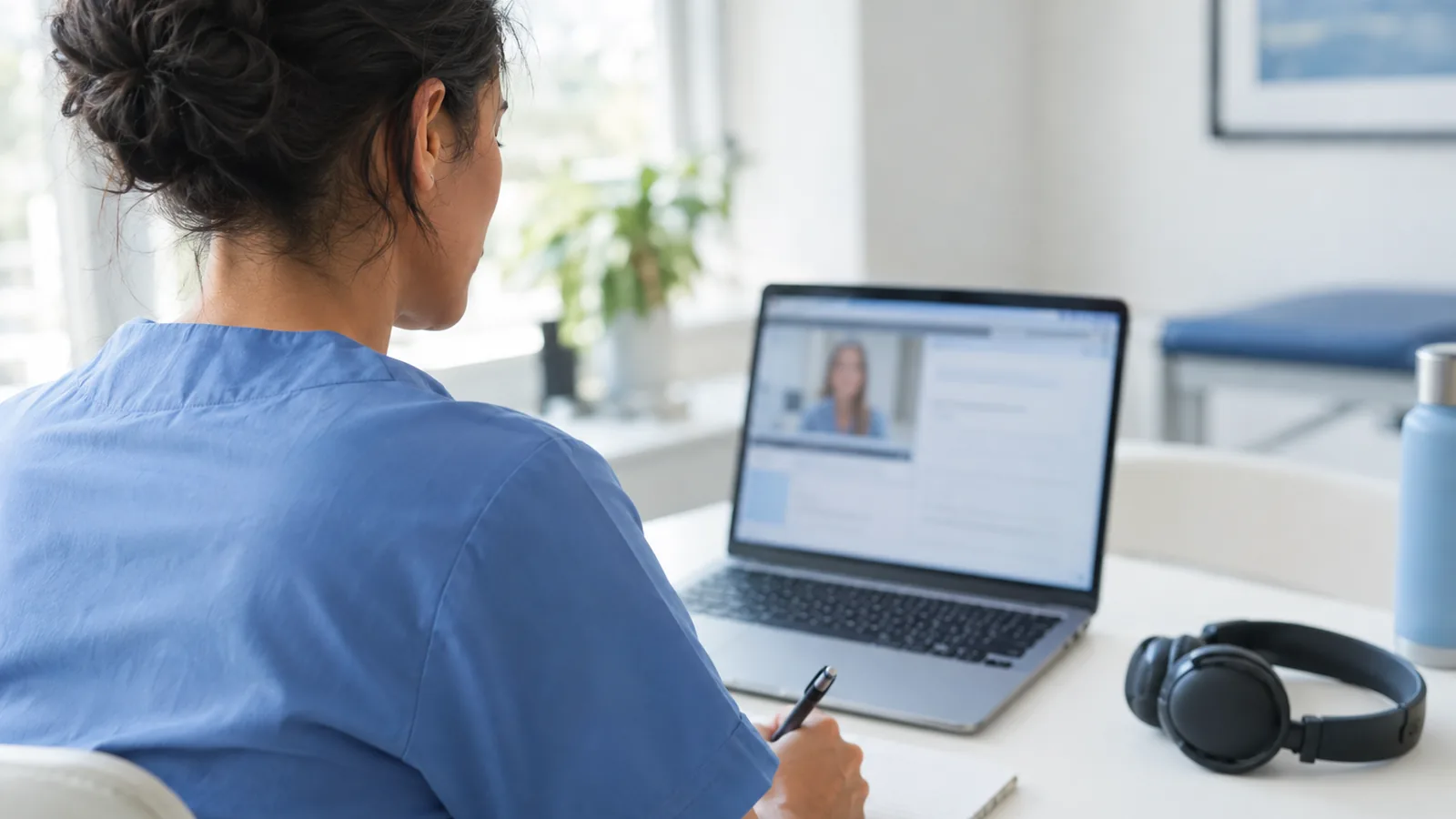
TheraPro Clinical's Smart Notes™ follows that pattern. When a telehealth visit ends, a SOAP draft is ready shortly after. The therapist reviews, edits and signs it. Nothing is filed automatically. Smart Notes are included on every Clinical plan with a monthly allowance, and visits run in the browser and in the patient's app with nothing to install.
AI should do the typing. The therapist should do the thinking.
Where this is heading
As therapy-specific evidence grows, expect AI drafting to become a standard feature rather than a novelty. The clinics that benefit most will be the ones that pair it with clear review habits, honest measurement and patient transparency. The goal was never to automate the note. It was to give therapists back the time the note used to take.